
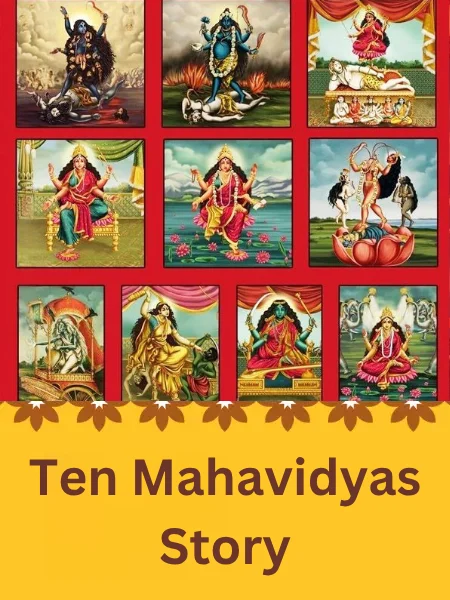
Experience the divine mystery of the Ten Mahavidyas — the ten forms of Adi Shakti — each embodying a profound aspect of supreme consciousness, wisdom, and spiritual power.
The Ten Mahavidyas — Kali, Tara, Tripura Sundari, Bhuvaneshwari, Bhairavi, Chhinnamasta, Dhumavati, Baglamukhi, Matangi, and Kamala — represent the ten cosmic expressions of the Divine Mother. Each form reveals a unique facet of the infinite feminine energy, guiding seekers toward liberation, wisdom, and divine union.
According to sacred scriptures, the worship of these Mahavidyas is a deeply esoteric and transformative practice, often undertaken by tantric sages and spiritual aspirants during Gupt Navratri — the hidden Navratris observed with secrecy and devotion. It is believed that by meditating upon these goddesses, one transcends fear, illusion, and worldly bondage, attaining both material and spiritual fulfillment.
Navratri occurs four times in a year — during the Shukla Paksha of the months of Chaitra, Ashadha, Ashwin, and Magha. Among these, Gupt Navratri is considered the most potent for invoking the Ten Mahavidyas. The supreme Shakti, the eternal mother of all creation, pervades every atom of existence. Even Lord Shiva, the embodiment of pure consciousness, is incomplete without her energy.
As told in the Shiva Purana and Devi Bhagavata Purana, once, Lord Shiva sought solitude for deep meditation. Goddess Parvati, filled with divine curiosity and love, wished to accompany him. When Shiva tried to leave, Parvati manifested her boundless cosmic energy and transformed into ten distinct forms, surrounding him from all sides. These ten forms — fierce, compassionate, and radiant — came to be known as the Dasha Mahavidyas, the ten great embodiments of divine wisdom.
Another legend speaks of a time when a powerful demon named Durmasura, son of Ruru, obtained a boon from Lord Brahma that granted him control over the sacred Vedas. Intoxicated by power, he hid the Vedas and plunged the worlds into ignorance. Without the wisdom of the scriptures, all spiritual practices ceased, and the Earth was filled with darkness and despair.
The gods, sages, and even the celestial trinity — Brahma, Vishnu, and Shiva — were powerless against Durmasura. In their anguish, they turned to Adi Shakti, the eternal mother of the universe. Answering their prayers, the Divine Mother manifested in ten resplendent forms — the Ten Mahavidyas — and waged a cosmic battle that lasted nine days and nights. The heavens trembled, the Earth rejoiced, and finally, the goddess emerged victorious, slaying Durmasura and restoring dharma and divine knowledge.
From this moment, the universe once again resonated with sacred hymns, and the Mahavidyas became eternal symbols of divine protection and awakening.
Kali is the first and most powerful among the Mahavidyas. She embodies time, transformation, and the eternal power of destruction that gives rise to creation. Her dark complexion symbolizes the infinite void, and her outstretched tongue signifies the devouring of ego and ignorance.
Tara, the blue-hued goddess, rescues souls from the ocean of delusion and fear. She is both fierce and merciful — the mother who guides devotees across the turbulent sea of existence toward enlightenment.
Chhinnamasta represents the paradox of life and death. Depicted holding her own severed head, she symbolizes self-realization through surrender — the victory of consciousness over ego.
Tripura Sundari, the youthful goddess of radiant beauty, governs the universe with love and grace. She represents divine harmony and the blissful union of the soul with the Supreme.
Bhuvaneshwari, the Mother of the Worlds, embodies space itself. She governs creation and abundance, blessing her devotees with peace, prosperity, and fulfillment.
Bhairavi merges the intensity of Mahakali with the serenity of Parvati. She burns away impurities through the fire of discipline and devotion, guiding souls to divine realization.
Dhumavati, the smoky and aged form of the Divine Mother, teaches the wisdom of renunciation. She appears as a widow, signifying the transcendence of worldly desires and the embrace of ultimate truth.
Baglamukhi, known as Pitambara Devi, possesses the power to paralyze evil and silence negativity. She symbolizes control over speech, thoughts, and enemies — both inner and outer.
Matangi, the emerald-green goddess, governs art, speech, and knowledge. She grants mastery over expression and intellect, guiding seekers toward divine creativity and eloquence.
Kamala, the final Mahavidya, is the tantric aspect of Goddess Lakshmi. Radiant and golden, she blesses her devotees with wealth, purity, and spiritual illumination.
The Ten Mahavidyas are not separate deities but ten expressions of the one eternal Mother — Adi Parashakti. Together, they represent the entire cycle of creation, preservation, destruction, concealment, and grace. To meditate upon them is to awaken the divine energy within and move closer to liberation (moksha).
Worshipping the Mahavidyas brings protection, wisdom, and fulfillment of desires — but above all, it awakens the soul to its own divinity.